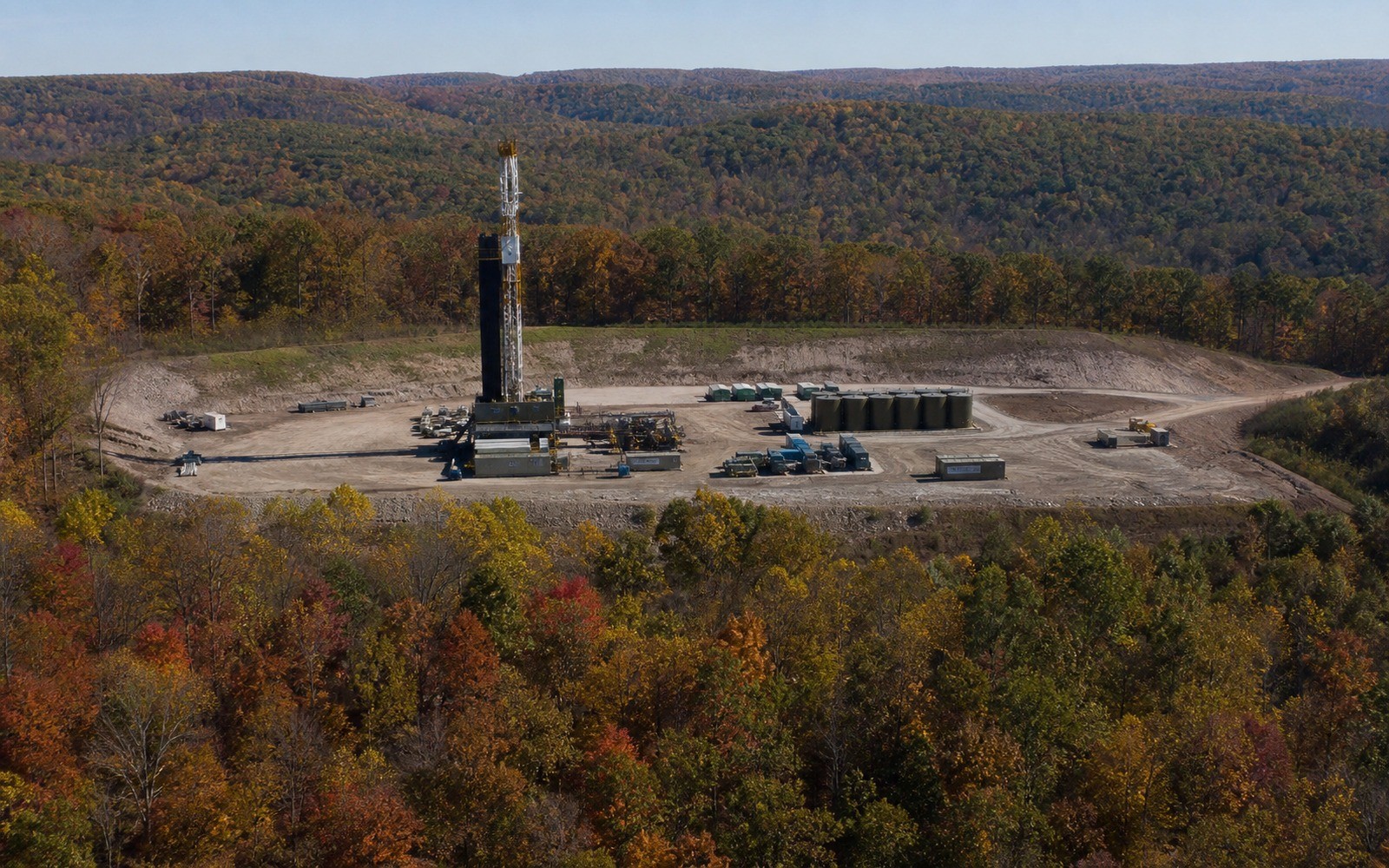
Utica Shale Mineral Rights
Utica Shale royalty in Belmont, Carroll, Harrison and Guernsey counties, Ohio. We review deep dry-gas leases, forced pooling and legacy Clinton wells before quoting.
Read more
A surprising number of Marcellus leases in Pennsylvania and West Virginia started life as flat-rate leases from decades before horizontal drilling existed, and how that old lease converted to a modern royalty is often the whole story.
The Marcellus Shale across Pennsylvania and West Virginia sits on top of Appalachian mineral ownership that, in many counties, predates the current horizontal shale boom by a century or more. It is common in this region for a family's mineral interest to trace back to a lease signed for a shallow conventional well decades ago, sometimes with flat-rate royalty terms, a fixed annual dollar amount regardless of production volume, that predate Pennsylvania's minimum royalty statute and were never renegotiated when the tract was later included in a modern horizontal Marcellus unit.
We buy royalty and ORRI interests throughout the play, and our review starts at the county courthouse, tracing the original lease and every amendment, ratification or pooling agreement that has been layered on top of it since, because in Appalachia the paper trail is frequently the largest driver of what your interest is actually worth.
Pennsylvania's minimum royalty law, enacted in the late 1970s, generally prohibits paying less than one-eighth of production value on newer leases, but older flat-rate leases signed before the statute took hold have sometimes continued to be interpreted differently, and how a given operator handled the conversion when a horizontal well was drilled on an old flat-rate tract varies. We read the original lease, any amendment or ratification, and compare it against the current statement's royalty calculation to confirm what rate is actually being applied and whether that matches what should legally be paid.
Many Appalachian tracts were never pooled at all under their original lease, since vertical wells decades ago were often drilled well by well rather than under a spacing unit. When a horizontal Marcellus well came along and needed a larger unit, operators typically obtained a pooling amendment or a new lease provision to combine your tract with neighboring acreage. We confirm this pooling authority was properly obtained and recorded, since a horizontal unit assembled without valid pooling authority over a specific tract can create a title problem that affects value.
Because so much Appalachian mineral ownership has stayed within the same family for multiple generations without formal transfer, we regularly trace title through several successive estates, sometimes finding that an interest was never probated at all and instead has been passed down informally. Pennsylvania and West Virginia both have established processes for resolving these gaps, sometimes through a formal probate and sometimes through a recorded affidavit of descent, and we walk each seller through what their specific county's records will support.
Appalachian mineral deeds occasionally severed oil and gas rights separately from coal or other solid minerals, sometimes in a different deed generations apart. We confirm your interest specifically covers oil and gas, since a deed that only conveyed coal rights, common in parts of West Virginia's coal counties, would not carry any interest in the Marcellus gas underneath.
We also check for any surface damage or timber agreement recorded alongside the mineral lease, since Appalachian landowners in this region sometimes negotiated separate compensation for surface disturbance or timber clearing at the time of leasing, and while that agreement does not affect your mineral royalty directly, it is often part of the same file we review when tracing a tract's full documentation history.
Recorded file
These answers keep the ownership file tied to recorded evidence rather than family shorthand or payor assumptions.
Flat-rate leases signed before Pennsylvania's minimum royalty statute have a complicated legal history, and how they apply to a modern horizontal well varies by specific lease and operator interpretation. We review your original lease and current statement together to understand what's actually being applied.
We check the county record for a pooling amendment, ratification, or updated lease provision authorizing your tract's inclusion in the current spacing unit, since older leases often lacked pooling language entirely.
It means we need to trace the chain of title through however many estates have passed since then, which we do through county probate and recording offices. It doesn't prevent a sale, it just determines what documentation we need.
It depends on how your specific deed was written, and in parts of Appalachia these were severed separately. We confirm your interest covers oil and gas before making an offer.
For questions specific to your family's estate or tax situation, yes, we'd encourage you to talk to your own attorney or CPA, and we're glad to provide documentation to support that conversation.
Utica Shale Mineral Rights
Utica Shale royalty in Belmont, Carroll, Harrison and Guernsey counties, Ohio. We review deep dry-gas leases, forced pooling and legacy Clinton wells before quoting.
Read more
Permian Basin Mineral Rights
We buy Permian Basin fee minerals, royalty, ORRI and non-op WI across West Texas and southeast New Mexico, with stacked-pay title review before every quote.
Read more
Delaware Basin Mineral Rights
We buy Delaware Basin RI, ORRI and non-op WI across Reeves, Loving, Culberson and Eddy counties, with title review of stacked Wolfcamp and Bone Spring units.
Read more
Mineral Interest Buyers
A county and state, owner name, deed reference, royalty statement, operator, lease, probate document, or written offer is enough to start organizing the chain.