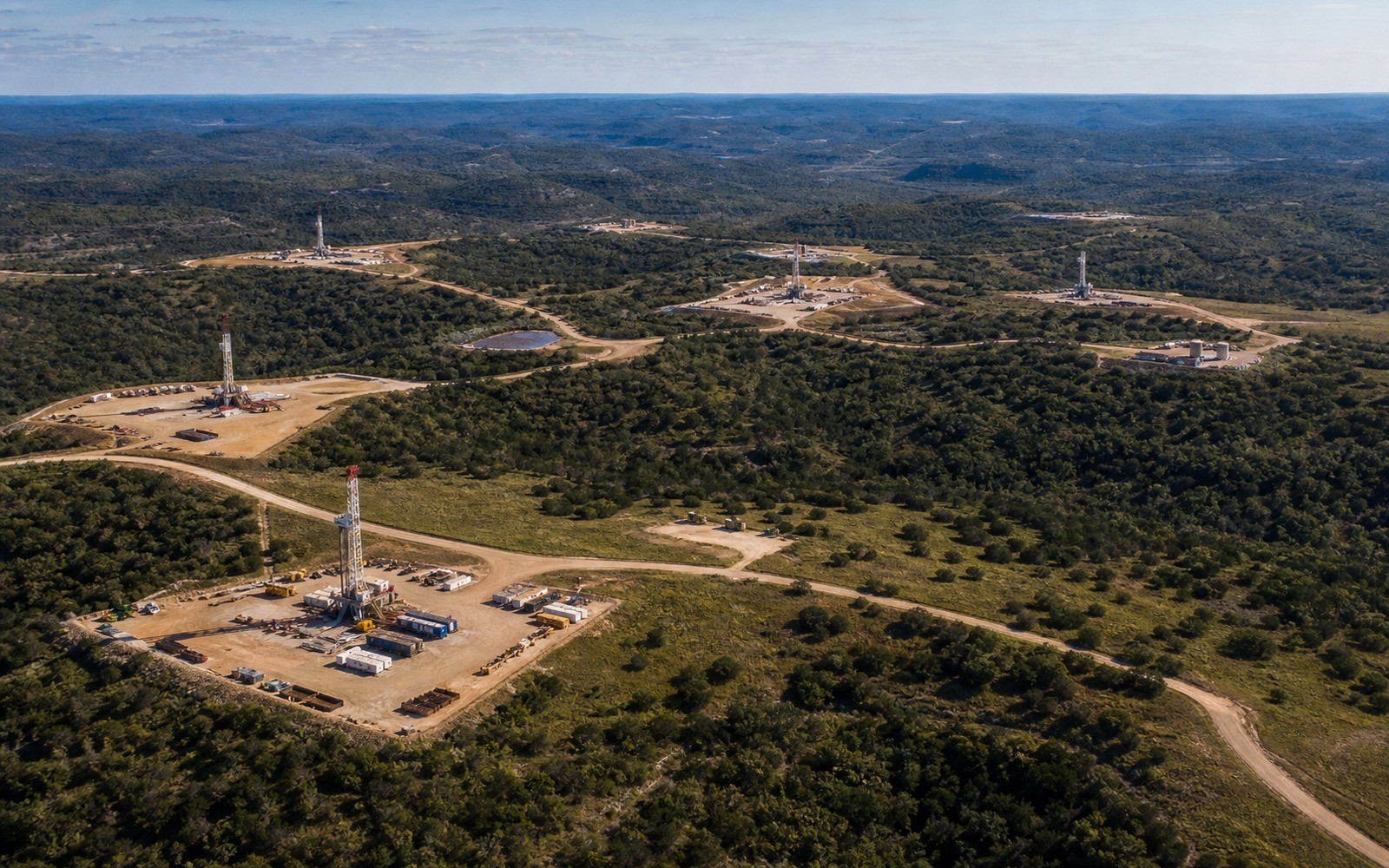
Delaware Basin Mineral Rights
We buy Delaware Basin RI, ORRI and non-op WI across Reeves, Loving, Culberson and Eddy counties, with title review of stacked Wolfcamp and Bone Spring units.
Read more
Permian Basin is an umbrella term covering two distinct sub-basins and multiple stacked pay zones, and a careful title review has to identify exactly which of those your tract falls into before a decimal means anything.
When we say Permian Basin, we mean the broad West Texas and southeast New Mexico region that includes both the Midland Basin to the east and the Delaware Basin to the west, separated by the Central Basin Platform, along with older conventional plays that predate the current horizontal shale cycle in both areas. If your lead or lease simply references the Permian Basin generally rather than a more specific sub-basin, our review starts by pinpointing exactly which county, and which side of the Central Basin Platform, your tract sits in, since Midland-side and Delaware-side development, pooling practices, and typical stacked-pay depth all differ.
We buy fee minerals, royalty interests, ORRI and select non-operated working interest positions across the full Permian footprint, and our approach to each interest follows the specific sub-basin and formation guidance appropriate to where your tract actually sits, rather than treating Permian as one uniform play.
A tract in Midland County and a tract in Reeves County are both technically Permian Basin, but they sit in different geologic sub-basins with different stacked-pay depths, different typical operators, and often different pooling histories, since Midland Basin development traces back to the 1950s while much of the Delaware Basin's intensive horizontal activity is more recent. We do not price a Permian interest without first confirming this location, because a generic Permian quote without sub-basin context would be guessing.
Before the current horizontal boom, the Permian Basin was already one of the most productive conventional oil regions in the country, and many tracts carry decades of vertical production history from formations like the San Andres or Clearfork that predate and sit above the deeper Wolfcamp and Spraberry shale zones now being developed horizontally. We check whether your interest includes this legacy conventional production, current horizontal shale production, or both, since older conventional leases sometimes carry different royalty terms than modern horizontal agreements.
We also check whether your specific tract has any history of secondary or enhanced recovery activity from its conventional production era, since some older Permian fields moved to waterflood decades before the current shale cycle, and a legacy waterflood unit agreement can still govern how royalty from shallower zones is calculated today.
For fee mineral owners specifically, the Permian's defining characteristic is its stacked pay: multiple productive zones at different depths under the same surface acreage, not all of which are necessarily developed yet. We evaluate current production alongside nearby well activity and confirmed spacing to understand how much of a tract's potential is already captured in existing royalty versus still undeveloped, and we price fee minerals with that fuller picture in mind rather than looking only at the current check.
Because the Permian has produced continuously for so long, non-operated working interest packages here sometimes include a mix of decades-old vertical wellbores and recently drilled horizontal wells within the same portfolio. We review the JOA and well inventory carefully for any WI position, since plugging and abandonment liability on an old marginal vertical well is a real cost that needs to be weighed against the value of production from newer horizontal wells in the same package.
We also confirm whether your interest includes both the surface fee and mineral fee or minerals only, since some Permian tracts were sold with the surface retained separately decades ago, and while surface ownership does not affect what we pay for your minerals, it does affect which deed instrument and which county requirements apply when we prepare the closing documents.
Recorded file
These answers keep the ownership file tied to recorded evidence rather than family shorthand or payor assumptions.
We determine this from your county and legal description. Both sit within the broader Permian Basin but have distinct development histories, and we review your interest according to which one applies.
It depends on the specific lease terms and whether newer horizontal wells were drilled under that same old lease or a new one. Long production history can be a positive sign of a productive tract, but the original royalty rate matters too.
It means more than one productive zone potentially exists under your acreage at different depths. We look at current production alongside nearby activity to understand how much of that potential is already reflected in your existing royalty.
Yes, selectively, after reviewing the joint operating agreement and well inventory for any associated plugging liability.
Permian Basin development varies significantly by sub-basin and specific location, so we can't provide a meaningful review or offer without first confirming exactly where your tract sits.
Delaware Basin Mineral Rights
We buy Delaware Basin RI, ORRI and non-op WI across Reeves, Loving, Culberson and Eddy counties, with title review of stacked Wolfcamp and Bone Spring units.
Read more
Midland Basin Mineral Rights
We buy Midland Basin RI, ORRI and fee mineral interests in Midland, Martin, Howard and Glasscock counties, with stacked Spraberry-Wolfcamp title review.
Read more
Eagle Ford Shale Mineral Rights
Eagle Ford royalty and ORRI in Karnes, DeWitt, La Salle and Gonzales counties. We review condensate-window leases and mature-decline production before quoting.
Read more
Mineral Interest Buyers
A county and state, owner name, deed reference, royalty statement, operator, lease, probate document, or written offer is enough to start organizing the chain.