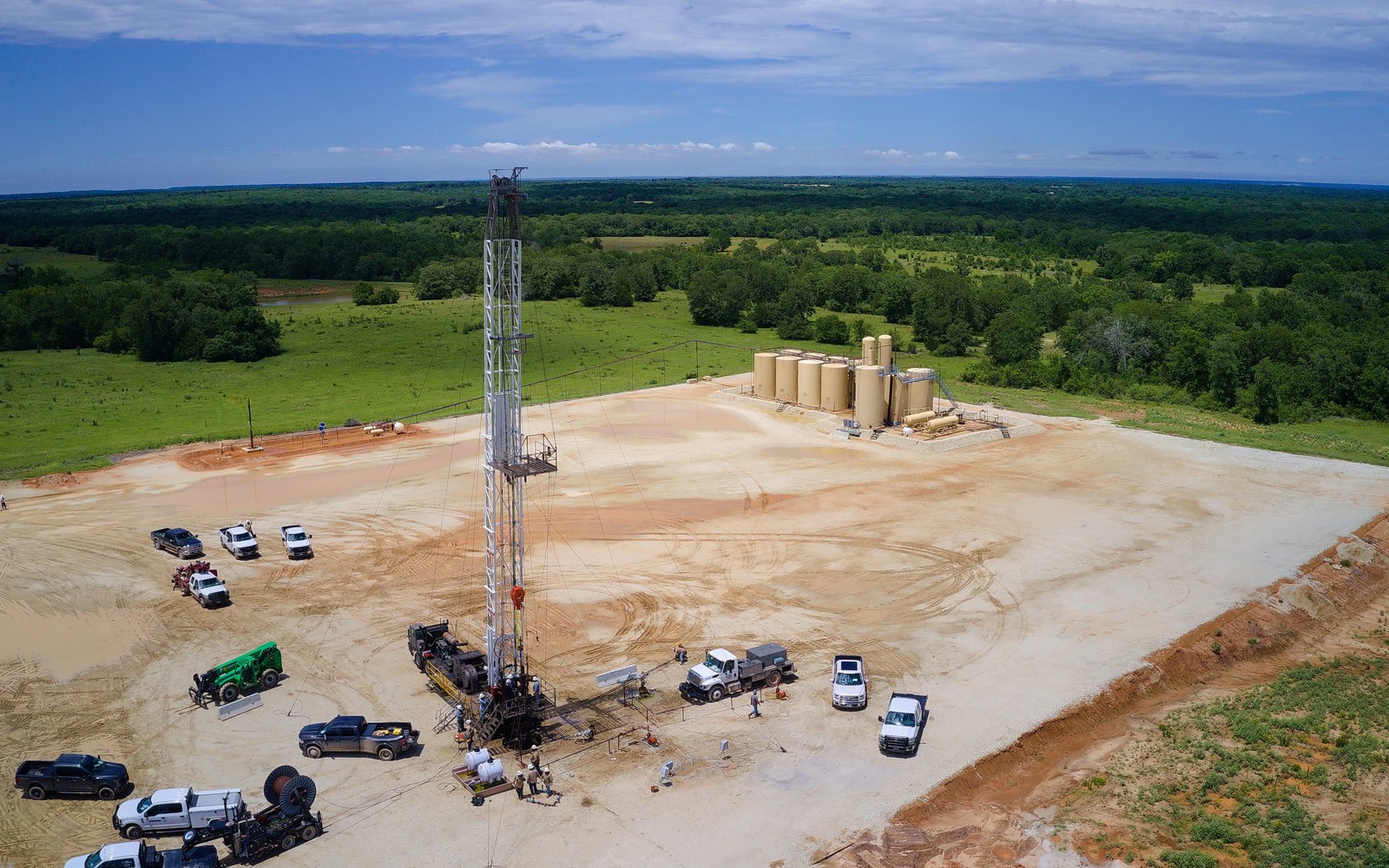
Anadarko Basin Mineral Rights
Selling minerals in the Anadarko Basin's stacked Mississippian-Woodford section? We review pooling orders, division orders and old vertical leases before we quote.
Read more
Louisiana's Haynesville acreage is governed by mineral servitude, not fee mineral ownership, and a servitude that hasn't been used in ten years can prescribe and revert to the surface owner regardless of what your deed says.
The Haynesville Shale, spanning Caddo, DeSoto, Bossier and Red River parishes in northwest Louisiana and extending into Panola and Harrison counties in East Texas, is a deep, high-pressure, high-temperature dry gas play that has seen renewed drilling activity in recent years alongside its original 2008 to 2012 boom. Because the play straddles the Texas-Louisiana line, we work under two different legal systems depending on which side of the state line your interest sits, and Louisiana's civil-law mineral servitude doctrine is the single biggest difference sellers here need to understand.
We buy royalty and ORRI interests throughout the play, and on the Louisiana side, our title review always includes a servitude prescription check, since unlike Texas fee mineral ownership, a Louisiana mineral servitude can expire through ten years of nonuse even if it was validly created.
Under Louisiana law, a mineral servitude, the right to explore for and produce minerals separate from the land itself, prescribes and reverts to the surface owner if it is not used, meaning no drilling or production activity occurs, for ten consecutive years. Active Haynesville drilling has kept most core-area servitudes alive well within that window, but if your interest is on the fringe of the play or on an old servitude that predates the current drilling cycle, we check the parish conveyance and production records to confirm the servitude has not prescribed before we make any offer.
We also check whether your parish or county has seen any recent lease bonus activity nearby, since renewed Haynesville development has occasionally prompted operators to approach owners of adjoining unleased tracts, and understanding that local activity level helps us confirm our valuation reflects current market conditions rather than an outdated comparison.
Haynesville wells are drilled and completed under high-pressure, high-temperature conditions that make them some of the more expensive wells in the country to bring online, and that cost structure sometimes shows up in how gathering, compression and treating costs are allocated on the royalty statement. We compare your lease's royalty clause to the current statement to confirm deductions are consistent with what was negotiated, since this affects net value even when gross gas volumes are strong.
A number of Haynesville units currently being drilled or re-completed sit on leases originally signed during the 2008 to 2010 leasing rush, and where a well has recently been added or refractured on an older unit, we check whether the original lease is still the operative document or whether a later amendment or new lease was executed. This matters because deduction language and royalty rates negotiated in 2008 differ from what would be negotiated in a current market.
On the Texas side of the play, in Panola and Harrison counties, mineral ownership follows the fee mineral system familiar from the rest of our Texas coverage, with no prescription concern. We identify which legal framework applies to your specific tract at the start of our review, since it changes both the documentation we request and the deed instrument we ultimately use to close.
We also review whether your tract has been affected by any unit expansion filed with the Louisiana Office of Conservation or the Texas Railroad Commission, since operators in this deep, expensive play sometimes redraw unit boundaries to optimize lateral placement across several original leases, and a boundary change can shift your percentage even where no new well has yet been drilled on your specific acreage.
Recorded file
These answers keep the Pittsburgh ownership file tied to recorded evidence rather than family shorthand or payor assumptions.
Under Louisiana law, mineral rights are legally distinct from land ownership and expire after ten years of nonuse, unlike Texas fee mineral ownership, which does not expire. We confirm your servitude is still active through parish records before any purchase.
We check parish conveyance and well production records for drilling or production activity within the relevant ten-year window. Active Haynesville development has kept most core-area servitudes current.
It matters significantly for the legal framework governing your ownership. We confirm which state your specific tract falls in and apply the correct title review process.
Haynesville wells are drilled under high-pressure, high-temperature conditions with higher associated costs, which can affect gathering and treating deductions depending on your specific lease language.
We check whether the original lease is still the operative document for any newer well on the unit, since older leases sometimes carry different royalty and deduction terms than what would be negotiated today.
Anadarko Basin Mineral Rights
Selling minerals in the Anadarko Basin's stacked Mississippian-Woodford section? We review pooling orders, division orders and old vertical leases before we quote.
Read more
SCOOP & STACK Mineral Rights
SCOOP and STACK royalty and ORRI in Grady, McClain, Kingfisher and Canadian counties, Oklahoma. We review OCC pooling orders and pooled fractions before quoting.
Read more
DJ Basin Mineral Rights
Selling minerals under the Wattenberg field in Weld County, Colorado? We review surface use agreements, setback rules and Niobrara/Codell spacing before quoting.
Read more
Mineral Interest Buyers
A county and state, owner name, deed reference, royalty statement, operator, lease, probate document, or written offer is enough to start organizing the chain.